
 Image 1 of 1
Berggarten Sage is a special selection of garden sage. The name Berggarten means “mountain garden,” referring to one of the historic garden areas of the Herrenhausen estate in Hanover, Germany.
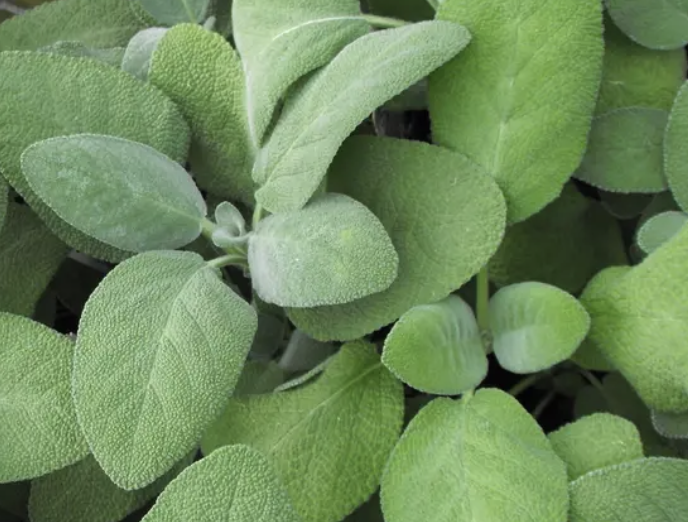
New growth starts bright green, then softens into a gray as the leaves mature. When grown in full sun, the plant often takes on a subtle purplish cast. Berggarten’s large, oval leaves are a noticeable change from the narrower, pointed leaves of traditional garden sage, but the flavor is just as good, if not better.
This sage rarely blooms, which helps extend the life of this perennial. Harvest and trim often by taking three to four inches of fresh, new growth. Avoid cutting back into old, woody stems, as this can stress the plant and may cause it to decline. Late fall pruning is also best avoided, since it can leave the plant vulnerable to winter cold.
Berggarten Sage is a special selection of garden sage. The name Berggarten means “mountain garden,” referring to one of the historic garden areas of the Herrenhausen estate in Hanover, Germany.
New growth starts bright green, then softens into a gray as the leaves mature. When grown in full sun, the plant often takes on a subtle purplish cast. Berggarten’s large, oval leaves are a noticeable change from the narrower, pointed leaves of traditional garden sage, but the flavor is just as good, if not better.
This sage rarely blooms, which helps extend the life of this perennial. Harvest and trim often by taking three to four inches of fresh, new growth. Avoid cutting back into old, woody stems, as this can stress the plant and may cause it to decline. Late fall pruning is also best avoided, since it can leave the plant vulnerable to winter cold.